Understand
your options.
Compare how LASIK, PRK, and implantable lenses approach vision correction, including the differences worth discussing.
Explore vision correction ↗ VELAVISION
LASIK & VISION CORRECTION / LOS ANGELES
Less time thinking about glasses. More possibility in the everyday. Explore a personal approach to laser vision correction, starting with the eyes—and the life—you have.
Individual assessment.
A decision that stays yours.

A THOUGHTFUL START
LASIK is one option. Understanding why it may—or may not—fit your eyes is where good care begins.
Compare how LASIK, PRK, and implantable lenses approach vision correction, including the differences worth discussing.
Explore vision correction ↗Bring your concerns about night driving, comfort, recovery, or cost. An evaluation should make room for the whole conversation.
Prepare for your visit ↗An assessment is information, not an obligation to have surgery. Glasses and contact lenses remain valid choices.
Get to know our approach ↗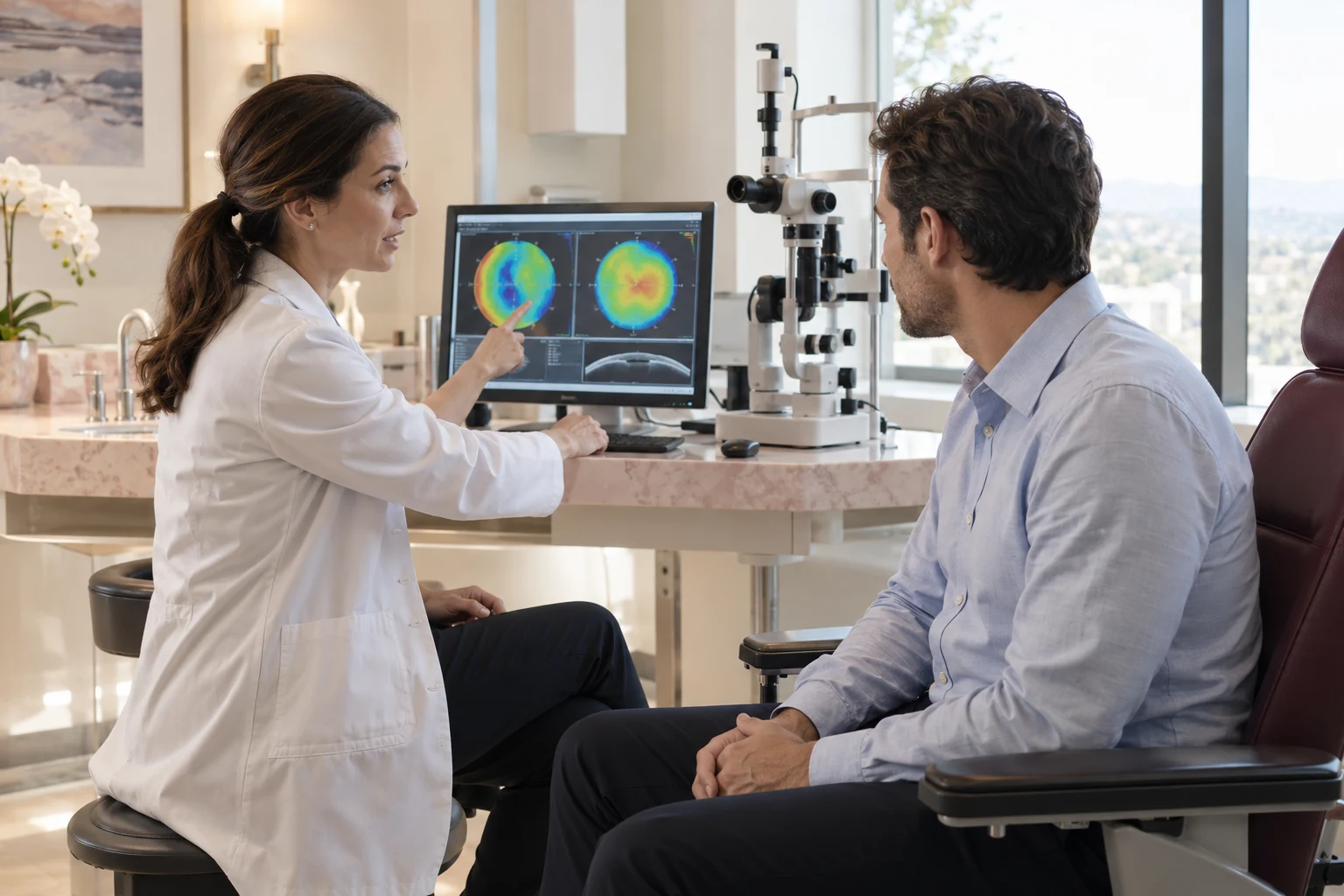
THE EXAM COMES FIRST
Prescription, corneal shape, tear film, and eye health all matter. So do your expectations and the activities that fill your days.
Understanding the trade-offs is part of the care, including the possibility of dry eyes, glare, halos, and needing glasses after surgery.
The VELA approach ↗FROM CURIOUS TO PREPARED
Start with the procedure guide and make a short list of questions.
A qualified eye surgeon reviews your measurements, history, and expectations.
Discuss benefits, limitations, risks, total costs, and follow-up before deciding.
An in-person examination is needed. A stable prescription is only one factor; corneal measurements, dry eye, general health, and expectations also matter.
You may. LASIK does not prevent normal age-related changes, and some people still need glasses for specific activities or reading.
No. Understanding your options and whether any procedure is suitable is the purpose of the assessment.