Skip to content
Fictional practice · Interactive website concept By Full Waiting Room ↗
APERTUREEYE INSTITUTE
Home / Our approach

The APERTURE philosophy

Technology informs.
Good judgment decides.

A sophisticated treatment begins with a careful question: should it be done at all? Explore an approach built around a complete picture of the eye and an unhurried decision.

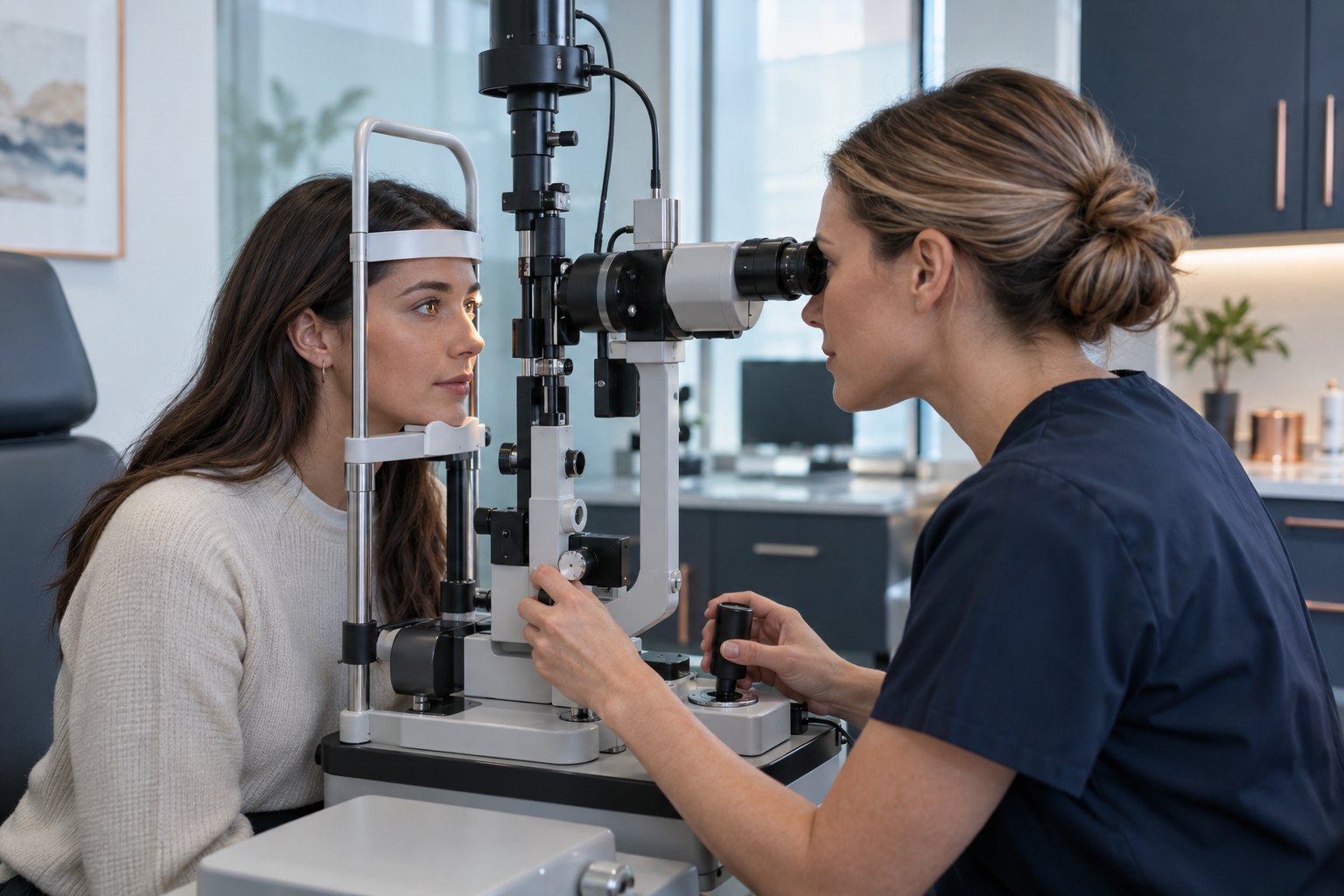
Illustrative slit-lamp examination in a modern eye clinic
LOOK CLOSER. Illustrative clinical setting

More than a prescription

The details shape
the recommendation.

Two people with the same glasses prescription may need very different advice. An assessment considers how the front of the eye is shaped, how healthy the surface is, and how your vision fits your life.

01

Listen before measuring.

Make time for what bothers you about glasses or contacts—and what you hope surgery can change.

02

Explain before recommending.

Turn the examination findings into a conversation you can understand. Ask for your options and the reasons behind them.

Inside the assessment

Measurements with meaning.

No impressive-sounding device replaces a full examination. These are examples of the information a clinician may consider.

01 / Corneal mapping

Shape, thickness,
and suitability.

Topography and tomography help characterize the cornea. Thickness and shape contribute to surgical planning and may reveal reasons to avoid a particular procedure.

02 / Eye-surface assessment

A healthy foundation
for vision.

The tear film and ocular surface influence comfort, measurement quality, and recovery. Existing dryness deserves attention before a treatment decision.

03 / Refraction & examination

The complete picture,
not one number.

Prescription, stability over time, pupil assessment, and an examination of eye health help frame the choices. Additional tests may be appropriate.

Ask about the actual device.

Before real treatment, request the patient information for the specific laser or lens being proposed. Ask why it is appropriate for your eyes, what its limitations are, and what alternatives are available. This fictional concept does not claim to own equipment or provide treatment.

A better consultation

Leave with answers,
not a sales pitch.

Your decision deserves time and a clear written plan. A useful consultation should make these questions easier to answer.

  1. Am I a suitable candidate? What could make you advise against surgery?
  2. Which options suit my eyes, and why do you prefer one?
  3. What outcomes are realistic for my daily activities?
  4. What could go wrong, and who handles complications?
  5. What do the full cost and aftercare arrangements include?
  6. What happens if I need more time to decide?

Prepare using the FDA's LASIK surgery checklist ↗.

A conversation is a good place to begin

See your options.
Then see what's next.

Explore the consultation experience, ask better questions, and move forward at your own pace.

Explore a consultation ↗ Interactive demo · No appointment is reserved
Compare options Explore a consultation ↗